

Displaying Jewish wall art in a modern home requires balancing cultural authenticity with contemporary design principles. The key is treating each piece as both a spiritual anchor and a design element selecting scale-appropriate Hebrew metal signs, canvas art, or typography that complements minimalist aesthetics while maintaining meaningful Jewish symbolism. Modern Jewish homes in 2026 successfully integrate traditional motifs through strategic placement, neutral color palettes, and intentional negative space that honors both heritage and current interior design trends.
Quick Answer: The Three-Rule Framework for Modern Judaica Display
Successful Judaica wall decor installation follows a clear hierarchy of design decisions. You need to think about physical presence before symbolic context, and context before aesthetic balance. This framework ensures your Hebrew art placement serves both the space and the tradition it represents.
- Scale First: Measure wall coverage at 60-75% of available space width for statement pieces like Hebrew metal wall signs.
- Context Second: Position art relative to sightlines and functional zones, keeping cultural significance visible during daily activities.
- Balance Third: Distribute visual weight through symmetric or asymmetric arrangements that honor traditional Jewish art integration principles.
This approach transforms how to display Jewish wall art in a modern home from a decorating challenge into a meaningful design statement. Ready to explore your wall decoration options? Let's dig deeper into the specifics.

Strategic Placement Analysis: Where Jewish Art Commands Attention Without Overwhelming Space
Modern Jewish home aesthetics demand intentionality. Every placement decision affects both the room's flow and the artwork's cultural resonance. The entryway offers the first opportunity a Hebrew welcome metal sign like the "Shalom Y'all horizontal" design establishes identity immediately without dominating the vestibule.
Living rooms require more nuanced positioning. A Hebrew home blessing metal sign works best opposite the primary seating arrangement, where it becomes a conversational focal point without competing with entertainment centers or statement furniture. The 57-inch gallery standard measuring from floor to artwork center applies here, but consider raising to 60-66 inches when mounting above a sofa or credenza.
According to Benariartgallery, this shift allows Jewish art to integrate more seamlessly into minimalist and contemporary design schemes. The dining room presents unique opportunities for contemporary Jewish home design. Position larger pieces where they remain visible during meals but don't distract from table settings.
| Room | Optimal Placement | Cultural Significance | Design Impact |
|---|---|---|---|
| Entryway | Eye-level, 36-48" from door | Welcomes with Hebrew blessing | High-first impression anchor |
| Living Room | Opposite seating, above console | Heritage focal point | Conversational centerpiece |
| Dining Room | Side wall, not behind table | Shabbat-appropriate backdrop | Atmospheric enhancement |
| Home Office | Behind desk, visible on calls | Identity affirmation | Professional-cultural fusion |
| Bedroom | Above headboard, centered | Personal blessing space | Intimate spiritual element |
Dining placement works differently than other rooms because the table itself anchors the space. A Mandala with Hebrew home blessing and a Star of David creates stunning visual interest on a perpendicular wall.

Scale Calibration: Matching Judaica Art Dimensions to Contemporary Room Proportions [2026 Data]
Modern Judaica display fails more often from scale mistakes than any other factor. An undersized piece reads as hesitant; an oversized one feels like it's shouting. The sweet spot exists you just need to calculate it properly for your specific space.
Wall coverage ratios provide the most reliable starting point. Measure the wall width where you plan to hang Jewish home aesthetics, then calculate 60-75% for the artwork width. This prevents the "floating postage stamp" effect while maintaining breathing room around the piece.
When choosing the perfect Judaica decor, consider these proportional pairings:
- Small Walls (24-36" width): 16-22" artwork perfect for petite Hebrew metal signs in powder rooms or reading nooks.
- Medium Walls (48-72" width): 28-42" artwork ideal for standard Hebrew home blessing metal signs in dining areas or hallways.
- Large Walls (84-120" width): 48-72" artwork statement pieces work above sofas or as living room focal points.
- Two-Story Spaces: 60-84" vertical pieces tall Hebrew typography anchors vertical space effectively.
- Gallery Walls: Mixed sizes totaling 75% wall coverage combine canvas prints with smaller metal accent pieces.
Hebrew metal wall signs carry different visual weight than canvas prints. The dimensional quality of metal work particularly with cutout Hebrew lettering reads visually larger than its actual measurements suggest. Account for shadow effects when planning your layout.
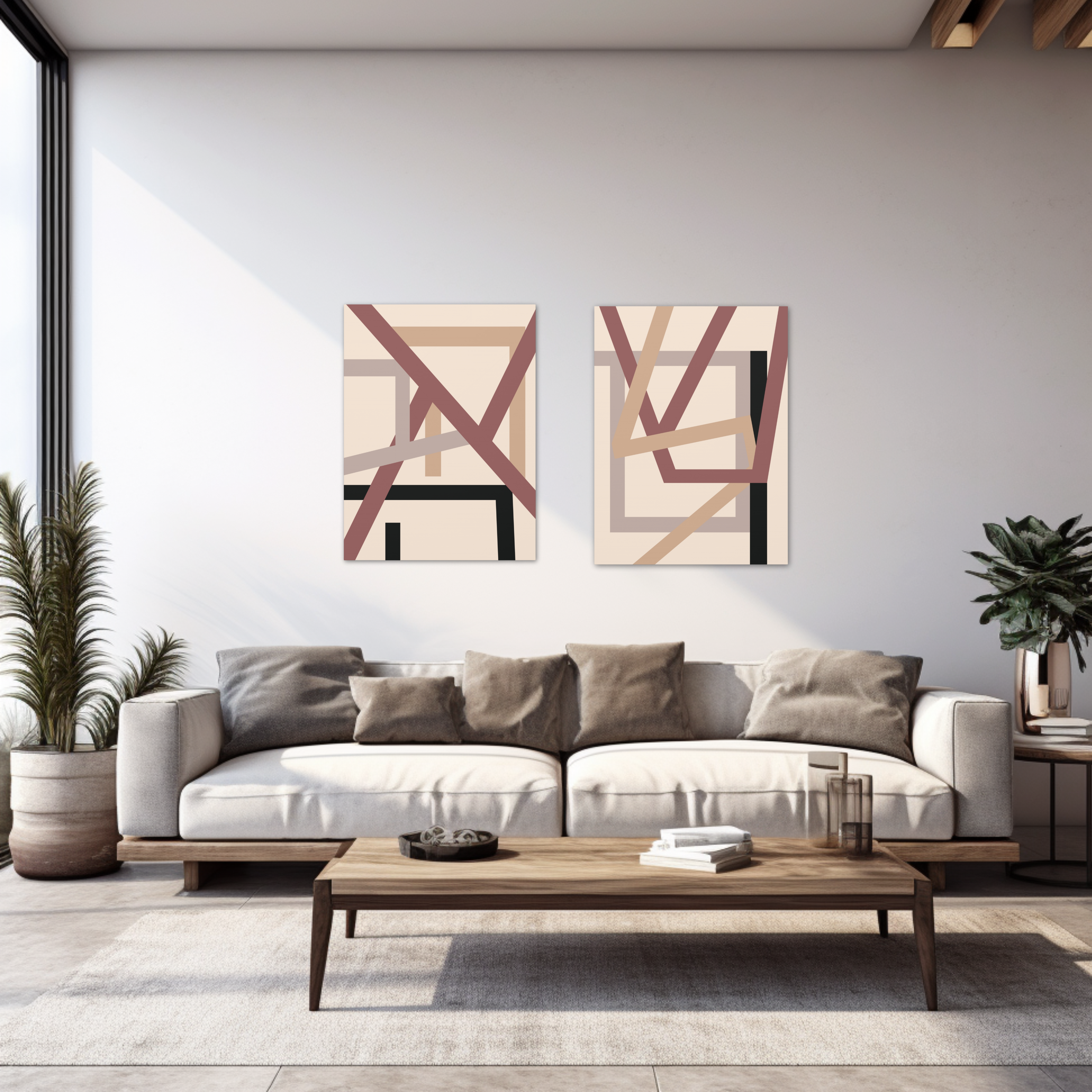
Color Integration Methods: Harmonizing Hebrew Art with Minimalist Palettes
Contemporary Jewish home design doesn't require abandoning color it requires curating it. The neutral-base strategy lets your Hebrew art placement sing without visual competition. Start with walls in warm whites, soft grays, or muted taupes, then select artwork finishes that complement rather than match.
Metallic finishes offer remarkable versatility. Matte black Hebrew home blessing signs anchor modern spaces with sophisticated edge. Brushed gold adds warmth without the flashiness of polished brass. Natural wood frames bridge traditional Jewish art integration with Scandinavian simplicity.

According to Accio, modern Judaica art trends are increasingly embracing abstract and minimalist interpretations of traditional themes. This approach works beautifully when you're layering multiple pieces or creating a curated collection.
Traditional blue-and-white Judaica adapts to minimalist spaces through strategic restraint. Consider one blue-based piece as an accent rather than building an entire color scheme around it. A single cobalt or navy element perhaps incorporating the Star of David pops dramatically against neutral surroundings without overwhelming the modern aesthetic.
How to Create Layered Displays: Gallery Walls and Curated Judaica Collections
Gallery walls transform how to display Jewish wall art in a modern home from single-statement to narrative-driven design. The technique works exceptionally well for families wanting to layer multiple Hebrew blessings, cultural symbols, and personal pieces into one cohesive installation.
Start with an anchor piece typically your largest or most significant item. A Hebrew home blessing metal sign often serves this central role beautifully. From there, build outward with complementary pieces.
- Step 1: Select your anchor piece and determine its center position at 57-60" from floor.
- Step 2: Choose 3-5 supporting pieces in varying sizes mix canvas prints with smaller metal accents.
- Step 3: Establish your arrangement style grid for formal symmetry, salon-style for organic flow.
- Step 4: Cut paper templates of each piece and tape to wall before committing to holes.
- Step 5: Maintain 2-3" spacing between pieces for grid arrangements, 1-4" for salon style.
- Step 6: Install largest piece first, then work outward checking level frequently.
When decorating with Hebrew letters, consider mixing dimensional metal pieces with flat prints. The textural contrast adds sophistication while the unified theme prevents visual chaos. This approach gives you flexibility to incorporate family pieces alongside newer purchases.
Lighting Techniques That Elevate Hebrew Typography and Metal Work
Light makes or breaks dimensional Hebrew metal wall signs. The cutout lettering creates natural shadow play that shifts throughout the day embrace it rather than fight it. Understanding how light interacts with your Jewish home aesthetics transforms good displays into exceptional ones.
Picture lights: These fixtures mount directly above artwork, casting focused illumination downward. Choose warm LED bulbs (2700-3000K) to complement metallic finishes without creating harsh reflections. Picture lights work especially well for detailed Hebrew typography where you want the lettering to stand out clearly.
Track systems: For gallery walls or multiple pieces, track lighting provides flexibility. Adjustable heads let you aim light precisely where needed. This approach suits larger installations where a single picture light cannot adequately illuminate the entire arrangement.
Ambient wash techniques create mood without direct spotlighting. Wall washers fixtures positioned 18-24" from the wall cast even illumination across an entire surface. This subtle approach works beautifully for spaces where you want the Jewish art present but not dominating.
Natural light requires consideration for preservation. Direct sunlight fades canvas prints and can cause metal finishes to oxidize over time. Position your Hebrew home blessing sign where it receives ambient daylight without direct UV exposure, or install UV-protective film on nearby windows.
The Cultural-Modern Balance: Maintaining Authenticity in Contemporary Design
Modern Judaica display succeeds only when it respects tradition while embracing contemporary sensibilities. This isn't compromise it's evolution. Your Jewish home aesthetics can honor centuries of tradition while feeling wholly current.
Hebrew text orientation requires attention. Traditionally, Hebrew reads right-to-left, and this orientation should be maintained on walls, even in modern contexts. This respect for the language's directionality demonstrates authentic traditional Jewish art integration rather than treating Hebrew as mere decoration.
Symbolic placement carries deeper meaning you might not immediately recognize. The mezuzah marks the Jewish home as sacred space your wall art extends this blessing throughout interior rooms. Positioning significant pieces like a home blessing near doorways echoes this tradition in larger format.
The Mandala with Hebrew home blessing and a Star of David exemplifies this balance perfectly. The mandala form speaks to universal spirituality while the Hebrew blessing and Star of David root it firmly in Jewish tradition. The geometric precision satisfies modern design sensibilities.
Step-by-Step Installation: Professional Results for Your Judaica Display
Proper installation protects both your artwork and your walls. Follow this sequence for secure, professional mounting of Hebrew metal signs and canvas prints.
- Locate wall studs: Use a stud finder to identify structural support essential for heavy metal pieces.
- Determine mounting height: Mark the center point at 57-60" from floor, adjusting for furniture placement.
- Check for level: Use a 4-foot level to mark horizontal lines the longer the level, the more accurate your placement.
- Select appropriate hardware: Metal signs require heavy-duty anchors or screw-in studs; canvas needs sawtooth hangers or wire.
- Drill pilot holes: Pre-drill prevents drywall cracking and ensures hardware seats properly.
- Install anchor hardware: For drywall without stud access, use toggle bolts rated for your artwork's weight.
- Mount and adjust: Hang your piece, check level again, and make micro-adjustments before final tightening.
Key Takeaways: Essential Principles for Displaying Jewish Wall Art
Mastering how to display Jewish wall art in a modern home comes down to five non-negotiable principles. These guidelines apply whether you're hanging a single statement piece or assembling an elaborate gallery wall.
- Scale determines impact: Calculate 60-75% wall coverage for single pieces, adjusting for dimensional metal work.
- Placement serves purpose: Position art where it enhances daily life visible during routines, not just special occasions.
- Color unifies without matching: Neutral walls with metallic accents create sophisticated backdrops for Hebrew art placement.
- Lighting reveals detail: Plan for both natural ambient light and focused picture lighting to showcase dimensional work.
- Tradition guides contemporary expression: Maintain Hebrew orientation and symbolic placement while embracing modern aesthetics.
FAQ: Common Questions About Modern Judaica Wall Display
What is the standard height for hanging Jewish wall art?
Yes 57 inches is the gallery standard. This measurement places artwork center at average eye level, creating comfortable viewing. For modern Jewish home aesthetics, consider raising to 60-66 inches when mounting above furniture leave 6-8 inches clearance above sofas and consoles.
Can I mix different metal finishes when displaying Hebrew art?
Yes finish mixing adds depth and sophistication. Combining matte black with brushed gold creates contemporary contrast typical in modern Judaica display. Maintain consistency in style language don't mix ornate traditional frames with sleek minimalist metal work in the same arrangement.
How far apart should pieces be in a Judaica gallery wall?
Two to three inches for grid arrangements, one to four inches for salon style. Consistent spacing creates visual cohesion in contemporary Jewish home design. For Hebrew art placement, slightly wider spacing prevents intricate lettering from visually overlapping when viewed from across the room.
Should Hebrew text on wall art face right-to-left?
Yes proper Hebrew orientation demonstrates cultural respect. Traditional Jewish art integration requires maintaining right-to-left reading direction even in modern contexts. This authenticity signals genuine connection to heritage rather than treating Hebrew as purely decorative element.
What size Hebrew home blessing works above a console table?
Twenty-eight to thirty-six inches wide for standard consoles. This proportion allows 6-8 inches of visible wall on each side, creating balanced modern Judaica display. For consoles under 48 inches, choose smaller blessings in the 20-24 inch range to maintain proper visual weight.
How do I protect metal Jewish art from bathroom humidity?
Yes but choose sealed finishes and ensure ventilation. Powder-coated or sealed Hebrew metal wall signs resist moisture damage better than raw metals. For traditional Jewish art integration in humid spaces, proper ventilation and maintaining 40-50% humidity prevents oxidation and finish degradation.