

Modern Shabbat decor merges centuries of tradition with clean contemporary lines, creating spaces that honor heritage while reflecting your personal aesthetic. The 2026 shift toward intentional minimalism in Jewish homes proves you don't need cluttered surfaces to create sacred atmosphere just thoughtfully curated pieces that speak to both your faith and design sensibility. This guide reveals how to transform your Shabbat table into a modern sanctuary where tradition meets style.
Quick Answer: The Three-Element Modern Shabbat Setup
Creating a contemporary Shabbat tablescape doesn't require dozens of competing elements. The most striking modern Jewish home styling follows a simple three-part formula that lets each piece breathe while maintaining ritual significance. Focus on these foundational components and you'll achieve an elegant Shabbat decoration scheme that photographs beautifully and feels authentically yours.

- Translucent challah boards: Glass or lucite boards create visual lightness while putting your braided loaf center stage, making the bread itself the artistic focal point rather than competing with an ornate platter.
- Neutral textile foundation: Crisp white or soft cream linens with subtle texture provide a clean backdrop that reflects candlelight and makes any accent pieces pop without overwhelming the senses.
- Minimal sculptural accents: One or two thoughtfully placed elements like a single bud vase or geometric candle holders add sophistication without the visual noise of traditional maximalist arrangements.
This streamlined approach reflects what design experts increasingly recommend for modern Shabbat table collection styling letting negative space become part of the aesthetic rather than filling every inch with decoration.
Why Lucite and Glass Define 2026 Shabbat Tables
Materials make or break contemporary Judaica design. While silver trays and velvet cloths served previous generations well, today's modern Shabbat table decor demands materials that feel airy, clean, and photogenic under evening light. The shift toward transparent surfaces represents more than aesthetic preference it reflects practical lifestyle changes in how families approach their Shabbat tablescape ideas.
According to Waterdalecollection, lucite is increasingly favored for modern Shabbat decor due to its clarity, lightweight nature, and versatility and these material qualities translate directly into glass challah boards gaining popularity among design-conscious households. Tempered glass offers several distinct advantages that traditional materials cannot match.

The visual lightness of glass creates an illusion of more table space, particularly valuable for smaller dining areas where every inch matters. Light passes through rather than bouncing off, creating depth and dimension that solid materials lack. This transparency also solves a common photography problem: glass surfaces don't create harsh reflections the way metallic trays do, making family dinner photos easier to capture without professional equipment.
Hygiene considerations have become increasingly important to hosts. Non-porous glass surfaces resist staining and odor absorption, washing clean with simple dish soap and water. Unlike wood, glass won't retain oils from previous weeks, and unlike silver, it requires no polishing or special storage conditions. These practical benefits explain why tempered glass challah boards have become essential pieces in the geometric glass challah board category.
| Material | Visual Weight | Maintenance | Light Interaction | Durability |
|---|---|---|---|---|
| Tempered Glass | Light, transparent | Dish soap, damp cloth | Refracts and transmits | High (tempered) |
| Lucite/Acrylic | Very light, clear | Soft cloth, mild cleaner | Clear transmission | Medium (scratch-prone) |
| Traditional Silver | Heavy, solid | Polishing required | Reflective, glare-prone | High (tarnishes) |
| Wood | Medium weight | Oiling, careful cleaning | Warm absorption | Medium (can stain) |
| Ceramic | Heavy, opaque | Hand wash often needed | Matte or glossy reflection | Medium (chip risk) |
The Five-Layer Modern Shabbat Table Formula
Layering creates visual interest without clutter when done intentionally. Professional stylists use systematic approaches to build tables that photograph beautifully and function practically for the meal itself. This five-step method transforms any table into a cohesive modern Jewish home styling statement from the ground up.
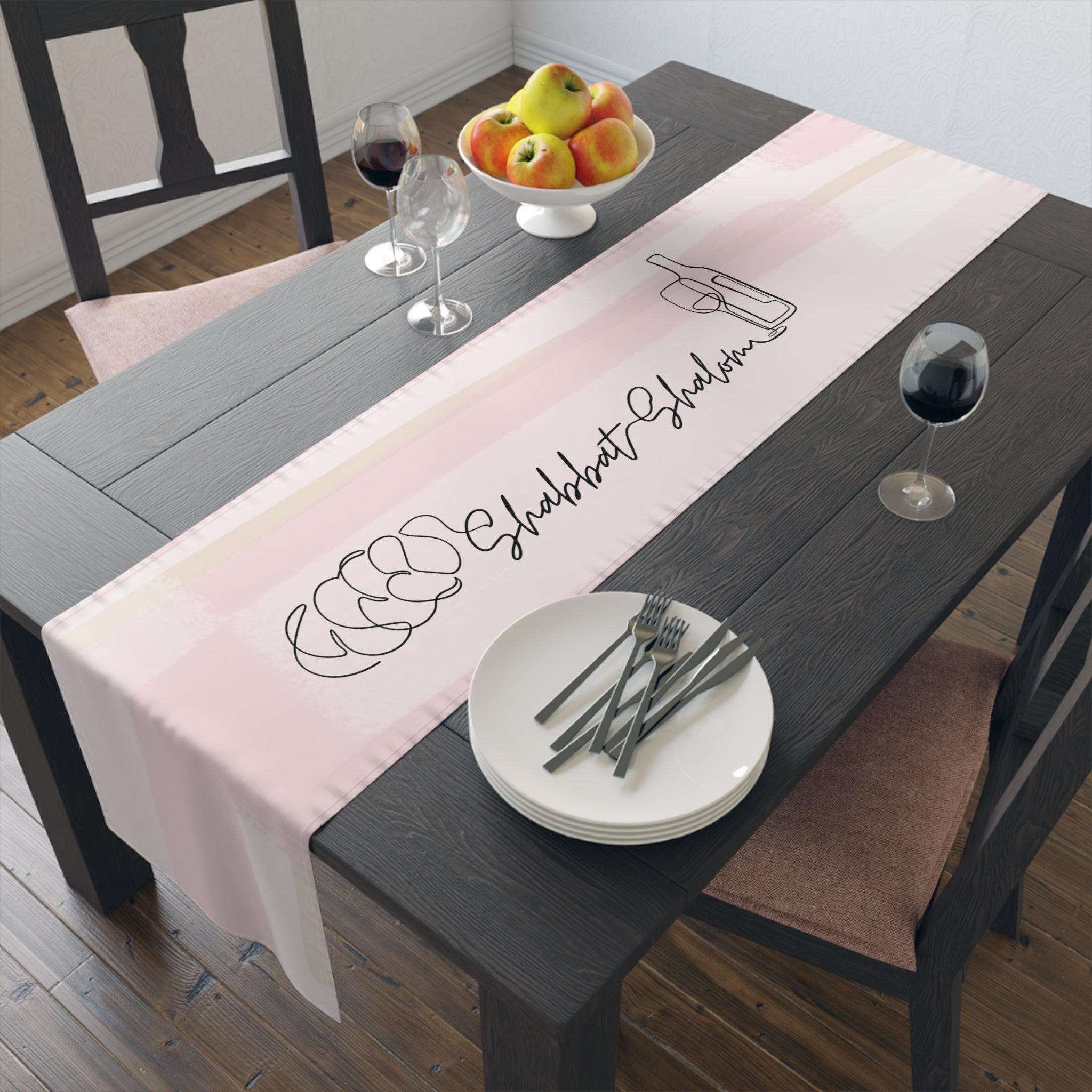
- Foundation layer: Begin with a quality tablecloth or runner in solid neutral tones. White or cream creates the classic Shabbat aesthetic, but sage green or charcoal works beautifully for contemporary settings just ensure the fabric has subtle texture to prevent a flat appearance.
- Place setting base: Position placemats that complement rather than match your foundation. For a white tablecloth, try woven rattan placemats or subtle geometric patterns in coordinating neutrals to add organic warmth beneath each plate setting.
- Runner accent: A table runner placed down the center axis creates structure and defines the serving zone. Modern Shabbat table aesthetic often features runners in contrasting but harmonious tones the Shabbat Challah Glass Board sits perfectly centered on this axis.
- Functional elements: Position your challah board, candlesticks, and Kiddush cup with deliberate spacing. Leave at least six inches between major pieces to maintain the airy feel that defines minimalist Shabbat setup, avoiding the cramped appearance of traditional setups.
- Decorative finishing: Add one sculptural accent a single stem in a slim vase, small olive branch sprigs, or a minimal floral arrangement positioned asymmetrically for modern appeal. Avoid symmetrical pairings; slight irregularity feels more contemporary.
Each layer should enhance without competing. The goal is visual harmony where your challah remains the undisputed centerpiece, supported rather than overwhelmed by surrounding elements.
Balancing Hebrew Typography With Minimalist Design
Hebrew lettering creates instant visual identity for Shabbat tables, but incorporating traditional text into modern design requires thoughtful restraint. The key lies in letting typography function as art rather than overwhelming the space with competing visual messages. One bold Hebrew inscription makes a stronger statement than five smaller ones.

According to Benariartgallery, there's a growing trend among younger Jewish families to integrate their heritage into modern design styles like Scandinavian or Japandi, seeking Judaica that honors tradition without clashing with contemporary home aesthetics. This generational shift explains why clean Hebrew typography on transparent backgrounds has replaced ornate traditional designs in many modern homes.
The Shabbat Challah Glass Board With Hebrew Shabbat Shalom And Geometric Shapes exemplifies this balance perfectly bold Hebrew text creates immediate recognition while geometric elements add contemporary visual interest that complements rather than distracts. The transparent glass background means the typography floats rather than blocking sightlines across the table.
Consider scale carefully. Larger typography creates drama and confidence; smaller text feels precious and easily overlooked. For main focal pieces like challah boards, generous letter sizing ensures your Shabbat Shalom message reads clearly from across the table. Secondary pieces can feature subtler text perhaps a delicate Hebrew inscription on a Kiddush cup that rewards closer examination.
Color Psychology: Beyond White and Silver in Modern Shabbat Decor
White and silver will always feel quintessentially Shabbat, but 2026's elegant Shabbat decorations expand the palette considerably. Color shapes mood more powerfully than most hosts realize, influencing everything from appetite to conversation flow. Understanding these psychological effects helps you create intentional atmospheres for different occasions and family compositions.
- Blush and rose tones: Creates warmth and intimacy without the formality of traditional palettes ideal for smaller family gatherings where you want conversation to flow easily and guests feel instant comfort.
- Sage green: Brings natural calm and spiritual grounding; pairs beautifully with wooden accents and works year-round but feels especially appropriate during spring and summer months.
- Charcoal and slate: Sophisticated and grounding for formal occasions; creates dramatic contrast with white challah covers and glass elements, photographing with gallery-quality depth.
- Warm terracotta: Earthy and inviting; connects to Israeli landscape colors and creates immediate warmth during colder months when gathering feels most precious.
- Soft navy: Elegant alternative to black; maintains formality while feeling less severe, working particularly well for evening Shabbat dinners under warm artificial lighting.
Mixing these colors requires confidence. Pair one accent color with your neutral foundation perhaps sage napkins on a white tablecloth with clear glass elements. The mistake most hosts make is introducing too many competing colors simultaneously. Restraint in palette allows each color choice to resonate.
How to Style Challah as the Table's Visual Anchor
Your challah deserves better than an afterthought placement. In contemporary challah presentation philosophy, the braided loaf functions as sculpture, centerpiece, and sacred object simultaneously. Proper styling elevates the bread from simple food to visual anchor point that grounds the entire tablescape composition.
Elevation matters more than most hosts realize. A challah board positioned flush against the tablecloth competes visually with plates and glasses. Consider placing your glass challah board on a slight riser or choosing a board design like the Shabbat Challah Glass Board - Shabbat Illustrations that incorporates visual depth through printed backgrounds. Even half an inch of lift dramatically improves presence.
Orientation affects photographs significantly. Position your challah so the braid pattern reads clearly from where most guests sit typically the head of the table or the side facing the room's main light source. If your board features Hebrew text or geometric designs, align these elements with your table's natural sight lines rather than positioning them for the host's view alone.
Covering creates ceremony. Even if you use a minimal setup, placing a challah cover during Kiddush and removing it dramatically before the blessing adds ritual theater. The Challah cover/ placemat for Shabbat table with the Hebrew words "Shabbat shalom" with gold decorations provides traditional covering function while maintaining contemporary aesthetics gold accents catch candlelight beautifully.
Key Takeaways: Modern Shabbat Decor Principles
Successful modern Shabbat table decor follows identifiable principles that anyone can apply regardless of budget or space constraints. These fundamentals separate polished contemporary settings from cluttered traditional tables, proving that restraint often creates more impact than abundance.
- Quality over quantity: Two exceptional pieces create more impact than ten mediocre ones invest in one stunning glass challah board rather than multiple disposable decorations.
- Transparency creates space: Glass and lucite materials make small tables feel larger by allowing light and sight lines to pass through rather than blocking visual flow.
- Negative space is intentional: Leave breathing room between elements; crowded surfaces photograph poorly and feel chaotic during the meal service.
- One focal Hebrew text: Let a single Hebrew inscription make your statement rather than competing messages that confuse the visual hierarchy.
- Color serves mood: Choose palettes based on the atmosphere you want to create, not arbitrary tradition color affects how guests feel.
- Practical durability matters: Tempered glass and quality fabrics withstand weekly use; fragile antiques create stress rather than enjoyment, so choose pieces built for living.
FAQ: Modern Shabbat Styling Questions
Can I mix traditional silver pieces with modern glass elements?
Yes, thoughtful mixing works beautifully. Limit metal accents to one or two heritage pieces perhaps heirloom candlesticks alongside your glass challah board and keep proportions balanced so neither material dominates completely. The contrast between patinated silver and clear glass actually enhances both materials.
How do I care for a tempered glass challah board properly?
Hand washing with mild dish soap is recommended. Tempered glass resists breaking but surface printing requires gentle cleaning without abrasive scrubbers that could damage designs over years of use. Most quality boards like those from Ateret Designs clean easily with just warm water and a soft cloth, maintaining their appearance through hundreds of Shabbat dinners.
What's the minimum budget for a modern Shabbat table setup?
Quality foundational pieces start around $95 for a glass challah board. Begin with one hero piece the board and build your collection gradually, adding neutral linens and simple candlesticks as budget allows rather than buying cheap alternatives you'll eventually replace anyway.
Are colored linens appropriate for Shabbat or just holidays?
Yes, colored linens work perfectly for weekly Shabbat. Traditional white remains classic, but modern aesthetics embrace color psychology sage, navy, and blush create sophisticated settings that feel appropriately reverent while reflecting personal style and seasonal moods.
How far in advance should I set my Shabbat table?
Thursday evening or Friday morning works best. Setting your table 12-24 hours before candle lighting reduces pre-Shabbat stress and allows time to notice missing elements without last-minute scrambling or violating preparation restrictions.
Can modern Shabbat decor work for large family gatherings?
Absolutely scale matters more than style. Use larger tablecloths coordinating runners, and ensure your glass challah board remains centered and prominent even with expanded place settings, repeating minimalist elements rather than adding new ones for bigger tables.
Article created with love by hoox